

The endocannabinoid system (ECS) represents a remarkable and complex signaling network that plays an integral role in maintaining biological balance within the human body. This physiological system, discovered relatively recently compared to other biological systems, has emerged as a crucial regulator of numerous bodily processes. In this overview, we will examine the fundamental components, operational mechanisms, and overarching functions of the ECS, providing a comprehensive understanding of its significance in human health and disease prevention.
Understanding the Endocannabinoid System
The endocannabinoid system is a sophisticated cell-signaling network identified during pioneering cannabis research in the early 1990s . Scientists investigating the effects of cannabis inadvertently uncovered this extensive system of receptors and signaling molecules, now recognized as a fundamental regulatory system present in all vertebrate species, highlighting its evolutionary importance .
This system comprises three core components: endocannabinoids (endogenous cannabinoids), cannabinoid receptors (primarily CB1 and CB2), and metabolic enzymes responsible for the synthesis and degradation of these signaling molecules . The ECS functions primarily as a universal regulator, ensuring stability and equilibrium across diverse physiological processes that maintain bodily functions .
Core Components and Their Functions
Endocannabinoids
Endocannabinoids are lipid-based neurotransmitters produced on demand in response to physiological needs . The two most extensively studied endocannabinoids are anandamide (AEA), often termed the “bliss molecule,” and 2-arachidonoylglycerol (2-AG). These molecules differ in their synthetic pathways and physiological roles despite their structural similarities .
Anandamide plays a significant role in mood regulation, reward processing, and overall emotional well-being, functioning as a neuromodulator that fine-tunes neural communication . Conversely, 2-AG, which is substantially more abundant in the mammalian brain, regulates immune responses, inflammation, and neural plasticity . The on-demand synthesis of these compounds allows the ECS to respond dynamically to the body’s changing physiological requirements.
Cannabinoid Receptors
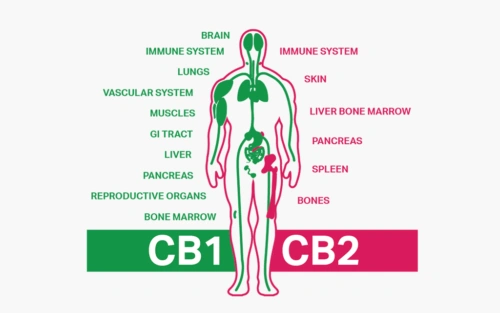
Cannabinoid receptors are G-protein coupled receptors distributed throughout the body, with CB1 receptors predominantly located in the central nervous system (brain and spinal cord) and CB2 receptors primarily found in immune cells and peripheral tissues .
CB1 receptors, densely populated in regions governing motor control, cognition, emotional responses, and homeostasis, mediate many of the psychoactive effects associated with cannabinoids . CB2 receptors, mainly expressed in immune cells, play a crucial role in modulating immune responses and inflammation . The strategic distribution of these receptors enables the ECS to exert influence over diverse physiological processes, from neurotransmitter release to immune function regulation.
Metabolic Enzymes
The ECS relies on specific enzymes for the precise regulation of endocannabinoid signaling. Fatty acid amide hydrolase (FAAH) primarily breaks down anandamide, while monoacylglycerol lipase (MAGL) is principally responsible for degrading 2-AG .
This enzymatic regulation ensures that endocannabinoids exert their effects briefly and locally, preventing excessive signaling and maintaining system balance . The intricate coordination between synthesis and degradation mechanisms allows for precise temporal control over endocannabinoid activity, making the ECS a highly responsive regulatory system.
Homeostatic Regulation Through the ECS
Homeostasis represents the body’s capacity to maintain internal stability despite external fluctuations, and the ECS serves as a master regulator of this equilibrium . The system modulates a wide array of physiological processes, including appetite regulation, sleep-wake cycles, immune responses, pain perception, and emotional states .
The ECS operates through retrograde signaling, wherein postsynaptic neurons release endocannabinoids that travel backward across synapses to modulate neurotransmitter release from presynaptic neurons . This unique signaling mechanism allows the ECS to fine-tune neuronal activity, ensuring optimal functioning within critical physiological parameters
Interactions with Plant Cannabinoids
THC (Tetrahydrocannabinol)
THC, the primary psychoactive component in cannabis, interacts with the ECS by directly binding to CB1 receptors in the brain and central nervous system . This interaction can produce various effects, including euphoria, altered perception, and appetite stimulation. However, excessive CB1 receptor activation may lead to undesirable side effects such as anxiety, cognitive impairment, and potential receptor desensitization . The dosage of THC thus presents a significant consideration for its appropriate application
CBD (Cannabidiol)
CBD exhibits a more complex interaction with the ECS, acting as a negative allosteric modulator of CB1 receptors rather than binding directly to them . This mechanism allows CBD to attenuate some of THC’s psychoactive effects while exerting its own therapeutic benefits . CBD also influences the ECS by inhibiting FAAH, thereby increasing anandamide levels, and interacts with other receptor systems such as serotonin and transient receptor potential (TRP) channels, contributing to its potential anti-inflammatory, anxiolytic, and neuroprotective properties .
Clinical Significance and Therapeutic Potential
The ECS has emerged as a promising therapeutic target for various conditions. The clinical endocannabinoid deficiency theory suggests that suboptimal ECS function may contribute to the development of certain treatment-resistant conditions such as migraine, fibromyalgia, and irritable bowel syndrome .
Lifestyle factors including regular exercise, balanced nutrition (particularly omega-3 fatty acids), stress management, and sufficient sleep contribute significantly to optimal ECS function . Additionally, phytocannabinoids and other ECS-modulating compounds offer potential therapeutic strategies for pain management, inflammatory disorders, neurodegenerative diseases, and mood disorders .
Conclusion
The endocannabinoid system represents a cornerstone of human physiology, orchestrating a complex regulatory network that maintains homeostasis across multiple bodily systems. Its influence extends from molecular interactions to overall well-being, affecting mood, sleep patterns, immune function, and neurological health. As research continues to unravel the complexities of this system, we gain deeper insights into its therapeutic potential and the importance of maintaining ECS balance for overall health. The evolving understanding of the ECS not only illuminates fundamental physiological processes but also opens new avenues for therapeutic interventions across a spectrum of health conditions.